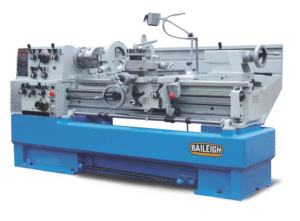

Locating the Electromagnetic Clutch Assembly
Understanding the placement and structure of the electromagnetic clutch is the first essential step in a correct adjustment procedure. On most lathe machines, the clutch is positioned close to the motor housing or integrated into the transmission system where torque transfer occurs. The assembly typically contains an arrangement of screws, locking nuts or sliding plates that regulate how strongly and how quickly the clutch engages. Before touching these components, it is important to identify which of them affects engagement distance, which influences pressure and which secures alignment. Clear visual inspection, supported by the manufacturer’s technical documentation, helps ensure that every later step remains precise and safe. Only after confirming the configuration should you proceed to modify the mechanism that regulates the initial activation point of the clutch.

Defining and Adjusting the Engagement Point
The engagement point is the stage at which the clutch fully transfers power from the motor to the spindle with predictable and stable response. A lathe machine requires this moment to be consistent, because any irregularity may affect cutting accuracy, tool feed or surface finish. To refine this setting, use the adjustment system to introduce very small corrections rather than large modifications that could destabilize the internal structure. Rotate screws in quarter-turn increments or shift plates slightly, depending on the construction of the clutch. After each adjustment, run the machine briefly and observe how the spindle responds. The clutch should begin engaging cleanly, without vibration, slipping or delayed activation. Incremental tuning makes it easier to detect the exact position at which engagement becomes smooth, strong and repeatable, reducing the risk of over-tightening or accidental misalignment.

Verification, Stability Checks and Final Testing
When the engagement appears correct, extend the test cycle to confirm long-term stability under different speeds and loads. Monitor the machine while starting, stopping and performing rapid transitions between operational modes. Any sign of inconsistent torque transfer suggests that another small correction is required. Only when the lathe shows uniform behavior during all test phases can you consider the procedure complete. In the concluding check, make sure that the clutch engages fluidly and that the spindle accelerates without hesitation. The final evaluation should confirm that the adjustment supports safe and reliable machining, especially when procedures depend on repeatable torque delivery. In many service guidelines, technicians note that proper performance can be achieved when the adjustment supports internal alignment and ensures that the mechanism behaves exactly as expected, which reflects how crucial adjusting clutch in a lathe machine is for long-term operational efficiency.